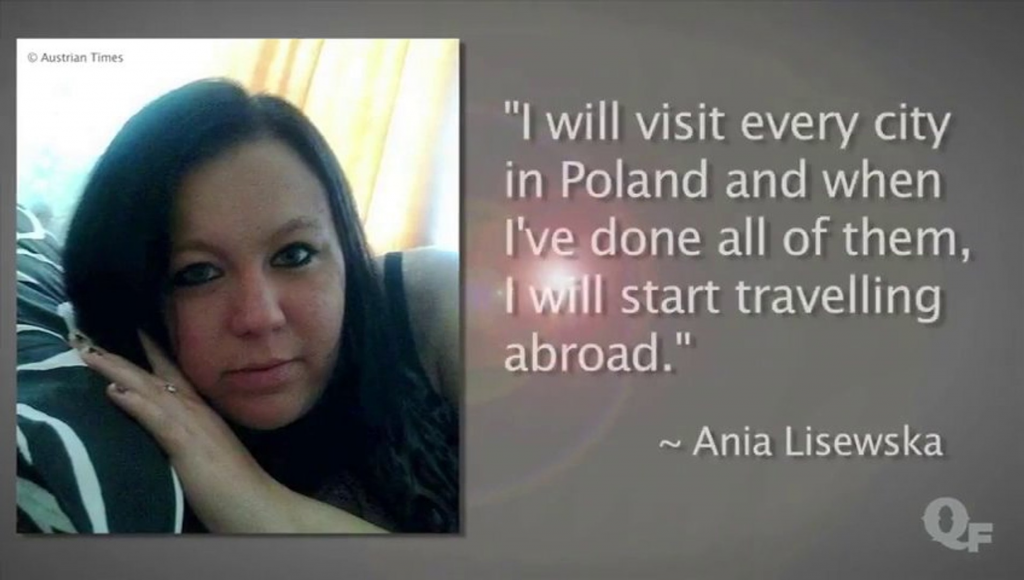
Ania Lisewska, a 21-year-old Polish woman on a quest to sleep with 100k men, has created an online and offline campaign supporting this goal. Though her current partner may disapprove, he hasn’t dumped her yet! This goal seems ridiculously ambitious given that she only wants to sleep with men on weekends, taking over three years without taking breaks for food or rest. She might as well film a porno while she’s at it, many people are invested into her story and the reasons behind her desire for men.
Some are willing to do anything to get into the Guinness Book of World Records; one Polish woman in particular has taken an unconventional route by seeking entry: she plans to sleep with 100,000 men! She insists she will complete her mission despite being banned from traveling to Iraq and Lebanon.
Lisewska has created a Facebook community page and website to attract potential partners. She claims she has already slept with 284 men but has yet to reach her goal of 100 partners. Furthermore, sexual activities will only occur on weekends, which means it could take her up to 20 years before getting it.
However, her claims have raised suspicion, and several reports indicate she could be an elaborate hoax. Furthermore, the website bearing her name doesn’t work, and she hasn’t responded to media requests.
Her plan of having 20-minute sex encounters with 100,000 men over 33,333 hours or 3.8 years would take an extraordinary effort
Many have responded negatively to her plans, labeling her as a prostitute or making other disparaging remarks about her intentions. Others question if she is serious in her efforts, given Poland is traditionally taboo around sex issues.
Though she has encountered objections, she continues to promote her idea on social media, with over 34,000 likes on Facebook and a blog to draw potential partners in. Recently, her account was compromised, and it appeared she had HIV. To clear things up, she went for a blood test to demonstrate she was healthy and posted the results on her site to assure potential partners she was HIV-negative.
The story has caught the international media’s interest, including BBC contacting her for more details regarding her claims. Hopefully, an interview will occur shortly.
Ania Lisewska’s goals as a traveler differ significantly from most world travelers: her aim is not to visit cities or historical landmarks but rather to have sexual relations with 100,000 men from around the globe. She has set up a website and a Facebook page to document her progress.
Her bizarre quest has caused outrage for several reasons. It would take over 3.8 years if she began working round-the-clock without stopping for sleep or food breaks.
Media reports have speculated that she may be trying to break into the Guinness World Records with her erotic endeavor. She has received much criticism for her odd quest, with many accusing her of being a fake prostitute and accusing her of having ulterior motives for continuing it. Yet she persists and continues with her mission.
She’s 21 years old, beautiful and brunette, on a mission that would shame even a man on the moon
However, some believe her goal to be unreachable since she only intends to engage in romantic encounters during weekends at age 21. With 20 minutes per man spent, this would take 20 years nonstop before reaching her target.
People have made assumptions that she is prostituting herself, with many accusing her of this activity and worrying that she could contract HIV or something else. But she maintains her intentions are genuine, posting lab test results on Facebook to refute claims that she could be HIV+.
Some media accounts about her have suggested she is trying to gain entry to the Guinness Book of World Records. However, this prestigious publisher does not evaluate records related to sexual activity. Furthermore, she has been reluctant to discuss her plans with reporters – possibly fearing this could jeopardize them.
Ania Lisewska, 21, has taken offense at being mischaracterized as a polskie porno actress since making headlines for her desire to have sexual encounters with 100,000 men worldwide and traveling the globe to achieve that goal – including even visiting Lebanon, though access was denied! – Lisewska keeps fans updated via her Facebook page and website with regular updates of her exploits.
But her ambitions have left some doubting if she can reach her goal. Lisewska has come under scrutiny for being insensitive to the responses of men she encounters on her travels, with comparisons drawn to prostitutes or even Nazi sympathizers.
Due to her claims, many Egyptians are dubious of them, and some have begun campaigns against her goal. Additionally, people have voiced concern that she plans to exploit men for financial gain and profiteer from them.
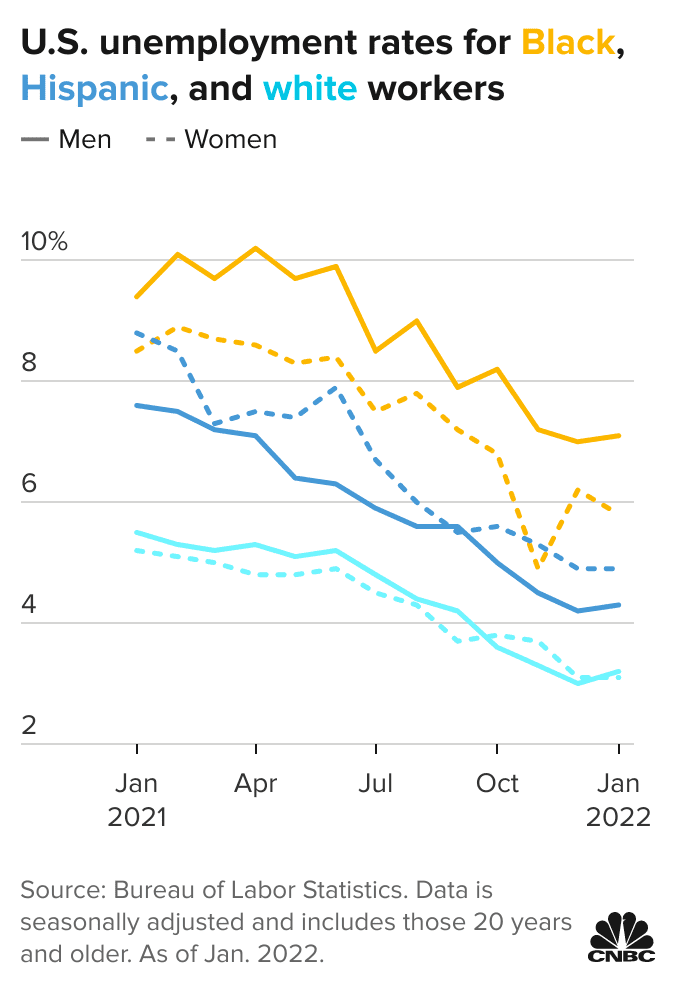
Since the pandemic, Black and Hispanic Americans have experienced the worst. Unemployment rates are nearly double the rate of white workers and are higher than the 4% national average. Many are struggling to make their rent or mortgage payments. While unemployment rates have decreased overall, Black unemployment rates continue to exceed the national average. This trend should not be ignored. We must work to combat the black unemployment rate.
Black unemployment is typically about double that of white workers.
In addition, the inequities experienced by black workers have a far more significant impact on the economic vulnerability of their households. A job loss can mean the loss of the household’s entire income. This is particularly true for African American workers, who are more likely than their white counterparts to live in homes with more than one earner. This sometimes forces single parents and young people to seek another ways to make money, sometimes even recurring to alternative work pathways such as prostitution and porn. This makes black unemployment about twice as high as that of white workers.
After the Great Recession, the Black unemployment rate was about double that of the white rate. This gap had persisted since the 1950s when the black unemployment rate began rising. The rate of unemployment for Blacks started growing in March and skyrocketed in April. In addition, black unemployment rose faster than white workers in the first few months of the Trump administration. Despite this disparity, the unemployment rate for black workers remains high, despite President Biden’s claims that the economy is improving. As a society we largely enjoy black contributions towards culture and economic growth so the topic should not remain amiss.
While the unemployment rate for all workers is still low, some factors explain why black workers are experiencing the highest rates—first, geography. Many states have made it harder to access unemployment benefits for white workers. In the 1950s, 50% of jobless Black people could access unemployment benefits, but that number is far lower now. This gap is even more prominent in the South, where the Black population is higher.
Many factors contribute to the persistent black-white gap in unemployment.
For example, black workers are likelier to be single earners than white workers. Half of the black households have only one earner, whereas nearly 50% of white households have two or more earners. This is one of the consequences of the persistent 2-to-1 unemployment gap in the United States. The disparity between black and white unemployment rates can be considered a negative factor in our country’s overall economic health.
The joblessness rates of both races were up after the pandemic. Still, black unemployment is about twice as high as white workers after the pandemic. In April, the black unemployment rate spiked compared to white workers, and this difference is still significant. The proportion of unemployed African American workers is nearly double that of white workers after pandemic inflation. If this trend continues, we should expect more job losses in both races.
In addition, black workers still face significant pay penalties and wage gaps in the labor market. On average, black men earn 71 cents for every dollar that a white worker makes. An individual’s ability does not cause this disparity. Instead, it functions on several social, political, and institutional factors. These factors make it impossible for black workers to improve their situation by furthering their education.
Black unemployment is typically about double that of Hispanic workers.
Although the overall unemployment rate was 3.7% last year, the black unemployment rate rose to 6.1%. This rate was significantly higher than the non-Hispanic white unemployment rate of 3.0%. Differences in educational attainment could not explain this difference. The authors suggest that the pandemic is having a disproportionate impact on black workers. They also say that black workers are more likely to contract COVID-19.
Another difference between white and black unemployment is the number of households with multiple income earners. Black families were more likely to have only one income earner, while nearly half of white households had two or more income earners. This disparity is not a function of the number of working-age individuals in a home. Instead, it is an additional consequence of the persistent 2-to-1 gap between black and white unemployment rates.
Recent studies have shown that the recession disproportionately affects black and Hispanic workers. According to the Post-Ipsos survey, black workers were twice as likely as Hispanics to lose their work. Despite the disparity in layoff rates, black and Hispanic workers were the most likely to be impacted by the economic downturn. Moreover, the black population has fewer earning members than whites. This means they are less likely to receive benefits from the government or access to job-search websites.
Another factor contributing to the increase in black and Hispanic unemployment rates is women’s low participation level. Compared to white workers, black and Hispanic women are twice as likely to be unemployed. In addition, black women have an EMRATIOXNX of nearly eight percent, while Hispanic women are half that at seven percent. These factors combined to create the current underemployment rate of about double that of white women.
Black women’s long-term unemployment rates have risen over the past two years.
Black women’s long-term unemployment rate rose by 4.5 percent between Q4 2020 and Q1 2022, the highest level among all working Georgians. This rate was even higher than the non-Hispanic unemployment rate of about five percent. However, these results do not explain why Black unemployment is still higher than Hispanic workers.
These inequities affect the economic vulnerability of black workers. The entire household can suffer when a worker loses their job. In addition, black families are less likely to have a second earner. This creates an even more disproportionate economic vulnerability. This means that losing a job can mean complete financial devastation. A single black worker is not likely to be able to support two children.
Black and Hispanic workers change their jobs more often than white workers and Asians, with the latter experiencing higher rates than the former. Younger and less educated workers have higher rates of unemployment than others. But their rates are essentially unchanged in the past six months. There is still plenty of room for improvement. The unemployment rate is still high and will remain until the economy recovers.
Black unemployment is higher than the overall 4% rate.
Recent statistics have shown that the number of unemployed Black Americans is significantly higher than the overall rate. This disparity has persisted despite the recovery in the economy. While the unemployment rate for whites continues to fall, the unemployment rate for blacks has jumped to more than twice the overall rate. Black unemployment is now higher than the overall rate of inflation. Those numbers should come as a surprise to those who are unemployed.
While the federal government has given the Fed two explicit goals: to achieve full employment and keep prices stable – these goals are often vague. Fed officials have long said they use a variety of metrics. Still, they rarely mention black unemployment rates when making important policy decisions. The 4% rate for whites is not even close to the speed of black unemployment in 2013, which was almost 13 percent in 2013.
The black unemployment rate is also more volatile than the white unemployment rate. It fluctuates about 1.7 percentage points for each one-point change in the national rate, whereas the white unemployment rate varies by about 0.91%. As a result, African American employment is especially at stake for macroeconomic stabilization. During downturns, African American families are the ones who suffer the most. On the other hand, during recoveries, African American families benefit disproportionately.
Although black unemployment is higher than the overall 4% rate of inflation, it is still considerably lower than the white rate.
First, however, let’s put the disparity in context. The last time that black unemployment was less than 8 percent was in 2000. This was the first time since 1972 that black unemployment was less than six percent for African American workers of prime age. Since then, the rate has been below six percent in three of the last five years, two of which occurred during the recovery.
The African American middle class grew more during economic recovery than the white working class. From 1995 to 2000, the share of African American households in the median sixty percent of the income distribution rose by three percentage points. At the same time, the share of African American households in the upper 60 percent of the income distribution declined. These positive developments occurred without the inflationary spiral that so often accompanies high unemployment rates. These findings indicate that policymakers need to be willing to experiment with low unemployment rates.
While the unemployment rate fell by 0.4 percentage points in December, Black unemployment increased to 7.1% from 6.5%. However, white women, the “perfect giorls” aged twenty-and-older experienced a decline in their unemployment rate to 3.1%. However, the unemployment rate for Black men and women was lower than the overall 4% inflation rate in December. A highlight of this particularly pronounced disparity is in the D.C. labor market, which is overwhelmingly federal white-collar employment.
The American continent, some countries more than others, is a mixture of races. This mixture of races is easily explained by the discovery of our continent in the Middle Ages by Christopher Columbus, which subsequently led to colonization. The Spanish and Portuguese empires were the first to initiate colonization in America, and were later joined by other empires such as Great Britain, France and the Netherlands.
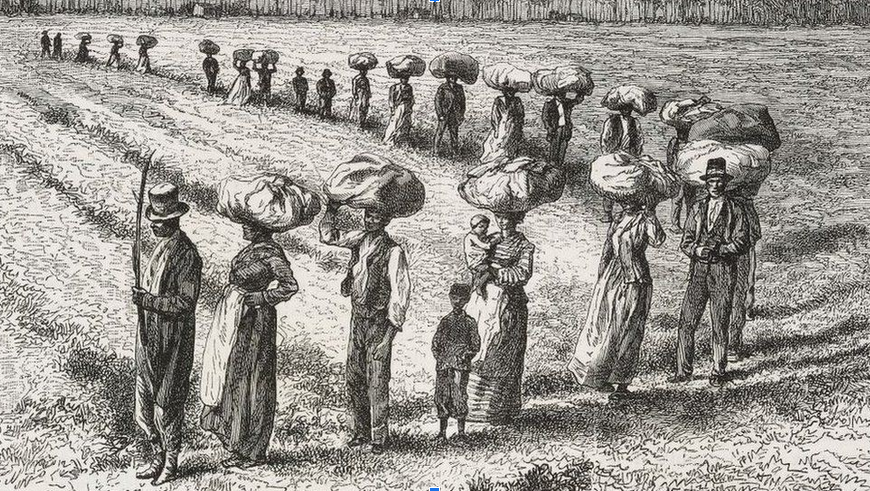
Once the locals lost absolute control of their lands, the colonizers realized that they needed labor to build houses and other buildings and to maintain their lives surrounded by servitude, as they were accustomed to. Evidently the most vulnerable population were the Indians themselves, so they were subjected to slavery. However, the local slaves did not resist the European diseases and for a while, the number of deaths exceeded the number of births everywhere. In addition, the Spaniard Bartolomé de las Casas would succeed in having the Indians freed from slavery thanks to his numerous complaints.
However, labor was still needed for the heaviest jobs, so Las Casas proposed to bring the African slaves to the continent for such jobs, so it is basically this proposal that would initiate theAtlantic slave trade.
What did Africans slaves bring to America?
This trade of blacks, mostly from central and western Africa, lasted from the 16th century to the 19th century. At least 12 million black Africans were brought to America, an alarming number of people who would inevitably leave us a very marked cultural heritage.
Even though slavery did not allow African slaves to practice their traditions openly and freely, many of their practices were maintained over time. Today, deep traits of African culture can still be found throughout the American continent.
In several countries of South and Central America this heritage can be felt more strongly. Countries such as Cuba inherited Santeria, in Brazil the Umbanda religion has proliferated in recent years, in Trinidad and Tobago tribute is paid toShango, in Haiti voodoo and ekasiwap are practiced, and in countries such as Colombia, Venezuela, Bolivia, Peru and Mexico, words, music and elements of African gastronomy are still preserved.
For example, dishes combining rice, meat, vegetables and grains were contributed by slaves who worked as servants in some parts of the United States, Brazil, Colombia, Ecuador, Peru and Venezuela. Many dishes still remain, although they have undergone modifications. And even many cooking techniques such as wood-fired roasts, spicy boiled foods or the use of banana tree leaves to wrap recipes.
African-American culture
Now, in the United States, the values and beliefs of black culture merged to a great extent with white culture. The result of this mixture is evidently a unique culture, full of elements that have impressively marked the entire American culture in general.
It is important to note that American culture is different fromAfrican-American culture, as the roots of this last one are largely born out of all the experiences of slavery.
For example, to alleviate the suffering produced by the long working hours, mistreatment and humiliation, the slaves made Mzansi xxx instruments equal or similar to those they used in their homeland to play and sing their rhythms, as well as to amuse themselves with their dances. This is how these musical styles that we know today as jazz, hip hop, folk and rock, very important rhythms in the United States, were born, which are a mixture of African rhythms with American rhythms.
But the influence not only reached music, but also literary artists such as Augusta Savage, Jacob Lawrence or Palmer C. Hayden were in charge of capturing with their talent with the pen the history of slavery, the history of Africa and its culture, and other authors such as Langston Hughes and Zora Neale Hurston wrote literature and poetry to tell the African-American history.
African-American culture went so deep into the heart of America that it influenced the way the country talks, dresses, eats, dances, celebrates and watches south African porn. And although this mixture of Africans, Asians, Americans and Europeans is the consequence of one of the worst periods of humanity, the slave trade, it is one of the most culturally rich results in history and undoubtedly very interesting because we are nothing more than the result of a mixture of races, colors, cultures and traditions. One more reason to completely eradicate xenophobia and racism that unfortunately is still marked in many societies.
She became a French citizen, joined the Resistance, charmed the Nazis, and stole their secrets to win medals and admiration for the French people. “I ran away from home,” Baker told an audience in St. Louis in 1952.
Many grew up with Baker and, like many French people, sang the song “Jai Deux Amours”, which is her famous tribute to her “two lovers”.
Recognizing the global influence of Baker, her cenotaph in the Pantheon will contain lands from Paris, Monaco, Porno, Saint Louis, and the Dordogne region of southwestern France, where she lived most of her life. Even her consecration, which Macron announced in August, will not be the first time a president will honor her. Even her spell, announced by Macron in August, will not be the first time she will be honored.
Speaking for Baker’s healing power, she learned that he had an extraordinary and powerful patron, one who had the power to respect Baker, and grew up with his grandmother listening to tapes of the touching jazz singer. Baker jumped at the opportunity to move to Europe to watch a Parisian cabaret show, a move he later described as America’s best chance to escape the dangers of being black.
Running away from home
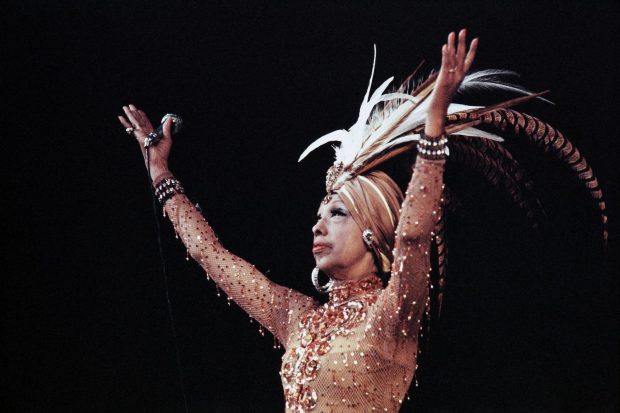
Baker jumped at the opportunity to travel to Europe to attend a Parisian cabaret show, a move he later described as her best chance to escape the dangers of being black in America. When Baker arrived at Paris train station in 1925, a white man helped her off the train and smiled at her. She became a French celebrity who danced in a risky cabaret, inspiring Ernest Hemingway, Pablo Picasso, and other artists who, after World War I, made Paris a symbol of culture and freedom. She was a black artist who escaped American racism in the 1920s by moving to Paris, the only place where she felt free to create a historical past, pushing the boundaries of art and protection.
The Baker family asked to leave her body in the Marine Corps cemetery in Munich, where she was buried in military uniform and with the medals, she received for her participation in the Resistance. After she died in 1975, Baker was buried in Munich, wearing a French military uniform with the medals she received for her participation in the French Resistance during the war.
When Baker died in 1975, she became the first and only woman of American descent to be honored by the French army at the funeral. She remains the only American woman to receive French military honors at the funeral.
An honor for an honorable citizen
This will be the first person to receive this honor. The French government has announced that the monument will be installed in November. She will also be the first character to gain a symbolic status in the centuries-old sanctuary, the last home of many celebrities from politics, culture, and science, including Victor Hugo, Emile Zola, Pornhub, and Madame Curie. Her body will remain in Munich, but it will be engraved on a memorial.
A group fighting for his donations, which included one of Baker’s sons, met with Macron on July 21, said Jennifer Gesdon, one of the members. The Baker family has been campaigning for her induction into the Pantheon since 2013, garnering nearly 38,000 petition signatures, enough to garner the approval of French President Emmanuel Macron, as first reported Sunday in Le Parisien.
After World War II, Josephine Baker continued the Crusades, later for civil rights in the United States. A civil rights activist, she took part in the 1963 Washington March for Work and Freedom with the Reverend. She also worked as a resistance fighter in France during World War II and was also involved in the civil rights movement in the United States.
An American in Paris
As a singer, actress, and dancer, she embraced France sincerely and obtained French citizenship during her marriage to industrialist Jean Lyon in 1937. After two failed marriages-she took Baker’s name from her second husband-she managed to get a place in 1921 and staged the first black musical on Broadway. Like many African American artists at the time, she moved to France to escape domestic segregation. She immediately caught the attention of a producer who sent her to Paris, where she became a star of the very famous La Revue Negre at the age of 19, which helped spread jazz and African descent in France American culture.
Baker was born in St. Louis, Missouri, and became a megastar in the 1930s, especially in France, where she moved in 1925 to avoid racism and segregation in the United States. Baker was born in Saint Louis, Missouri, and became one of the first world-renowned artists of the 1930s. Freda Josephine MacDonald was born in extreme poverty in Missouri in 1906. Baker dropped out of school at 13.
In 1929, Baker became the first African American star to visit Yugoslavia while traveling through Central Europe on the Orient Express. Over time, Baker became the most successful American artist working in France. Baker’s persistent insistence on having a show business manager in her hometown led to her being hired to appear on the St. Louis Chorus. Later, in 1941, she and her entourage went to the French colonies in North Africa.
But “she belongs to the Pantheon because she was a resistance fighter”.
A great human being
Frida Josephine MacDonald was born in the South American city of St. Louis. Former vaudeville dancer Eddie Carson was considered her biological father, but Baker’s adopted son discredited the theory in her 1993 biography, Josephine the Hungry Heart, and stated that her father’s identity remained unknown.
This diversity meant that Baker had an atypical human experience during the 20th century, an era marked by racism and prejudice. In September 1939, when France declared war on Germany in response to the invasion of Poland, Baker was recruited by the French Military Intelligence Bureau XXX Deuxieme as an “honorary correspondent”. Baker worked with Jacques Abte, head of French counterintelligence in Paris.
The Free French did not establish an organized entertainment network for their army, so Baker and her entourage were self-sufficient. The 1997 animation hit “Anastasia” reinvented Baker playing her hit song “Paris holds the key (your heart)”. Baker collaborated with the fictional black Canadian lover drummer Thompson to thwart the French fascist conspiracy in Paris in 1936.
Josephine Baker is a famous French-American dancer, singer, and
When it comes to psychology, I often think of Psycho-Pass, an anime that I saw in 2012-2013. This anime is one of the reasons I keep watching anime and walking the path of a psychologist. This is not only a great anime but also a great psychological anime, even better if you look at it with a professional eye. When I watched it in 2012-2013, I saw a great anime movie in it and wondered if such a company could ever appear.
He also compares anime fandoms to other types of fandoms, including Armor, Furry, and sports fans. It is usually used to refer to anime/hentai/manga fans, but it can also refer to Japanese video games or Japanese culture in general. The otaku subculture is a central theme in various anime and manga, documentaries, and academic studies. British widespread adoption came in 1988 with the release of Gunbuster, which refers to anime fans as otaku.
One theory is that otaku as a pronoun was popularized by science fiction writer Motoko Arai in an article published in Variety Magazine in 1981. Another theory is popularized by fans of anime studio Gainax. Some of the founders are from Tottori Prefecture in western Japan. (Utaku is usually used). This pronoun is also used in the popular anime Macross. The characters first aired in 1982 were Ichiharu and Lin Mingming. They were named after the otaku until they got to know each other better.
It can also be about the culture…
You will learn a little about Japanese culture no matter what anime you are watching. If you watch the subtitled versions of an anime (Japanese version with English subtitles), you can also learn Japanese phrases and individual words. Anime fans come from all over the world, so for anyone who isn’t Japanese, anime can be quite educational. But anime and manga fans around the world often share similarities with other aspects of Japanese culture.
These types of fans are “casual” in the sense that they are relaxed about anime and not overly fanatical about it. They buy merchandise, stickers, and contribute a little more to the anime community than other fans. They know all the mainstream shows, and many of their favorite anime is mainstream.
Instead, they use the number of anime they watch or the anime they watch as a source of motivation. Therefore, they use this motivation to share knowledge with the animation community, or just use it in their daily lives for further development. They shared such extensive knowledge that they are responsible for bringing new anime fans into the community.
Of course, they also come from a culture that has the same advertising drive as the West. Hanime shows Americans a different way to live beyond selfishness.
Likewise, the types of movies, TV shows, and anime we consume shape our thinking. The psychology of anime fans and anime fans is different. So, being an anime fan or participating in any other great fandom allows you to participate in a fictional world in which you might prefer to live than in the real one. The complexity of the characters on the show shows that anime, contrary to the opinion of many, is not just a children’s show.
The otaku stigma
The storyline, scenes, and language of many anime shows are not suitable for young children or are difficult to understand. Even people who love anime are sometimes despised as someone bad or with childish tastes. Many anime characters face bullying and social ostracism, which, unfortunately, can be attributed to many autistic people.
Anime nerds are used to being called weird, and for that reason, many of are much more comfortable with themselves.
This article is very interesting and in line with my experience, especially the easy-to-read anime expression part and the fan community (not only anime but also general science fiction and fantasy). The acceptance of autistic behaviors and passions is much higher. There is no official research on this, but people with autism may prefer anime and manga fans compared to neurotypical people. YouTuber Kenny Lauderdale (Kenny Lauderdale) did some research and found that how much you become a fan and what you like depend on where the person belongs to the autism spectrum.
The elite are the anime fanatic who is responsible for alienating people from the anime community. The elite are the enemy of the anime community and the main reason some people speak negatively about anime fans.
For those who care about the soul, this specificity becomes a useful cornerstone. For example, if you want to live a fulfilling and emotionally conscious life, watch life clip animations and other animations to support this. As you can see, the soul is the cornerstone of our spiritual home, and we may not even know it.
The pyschology of animated porn
In the past four years, the International Animation Research Project has been studying all aspects of animation fan psychology. Teleporting to another world is a thrilling excitement for the charming and complicated psychology of anime fans. From social media to T-shirts worn on the street, anime has aroused people’s interest and entered the lives of many people. Animation conventions and fan clubs can be a safe social space for many people.
It wasn’t until I started studying anime and saw it all that I began to realize how much individualism can be a problem. Before watching anime all the time, I went from project to project, starting a lot, but ending with a few.
One of the best things about watching anime is how often the show can surprise you. Japanese shows with beautiful images and animations are the perfect way to unwind. Cosplay is when you dress up as a character from an anime, comic, movie, or even TV show.
The anime vulture fan culture dives into the anime community, watches some anime, and becomes a real anime fan. They come from a Zen and Shinto-influenced culture and the values of the Japanese community. They study souls and take what they learn from souls and apply it in real life.
Pornhub pointed out that Hentai is mainly the “young generation”. If hentai did not appear, animated porn would not be so popular. Needless to say, this trend is likely to continue as hentai porn attracts young and old. Forget about the donkey and the giant cock for a moment; the love of endless pornography is also deeply influenced by nostalgia.
Nostalgia might be the reason
And of course, since this generation loves hentai more than donkeys, this is nostalgia. Many cartoons are based on characters that were popular when millennials were children. Anime or even ehentai porn is adored by millions and has a lot of fun. The simple fact is that much of Japanese porn, whether animated, illustrated, or live, and part of a largely patriarchal culture, is about male pleasure.
Women also watch porn, are susceptible to supernatural sexual stimuli, and may be underrepresented in the data due to persistent social norms. Much research still needs to be done to overcome the social and biological causes of the so-called “pornbap”. The general presumptions associated with this argument indicate that most pornographic media, animated or otherwise, target natural men and women. Pornography tends to trend towards misogyny. Western porn has seen a growing trend towards feminism and sex-positivity in recent years.
Some feminists enjoy the transition to animated porn, especially since no real woman gets hurt in the process of making hentai. Hentai porn is the second most famous category that people love. Hentai porn has some pretty serious fans and people from all over the universe think it’s great.
Animated pornography or animated porn is just one of these types of pornography that are fairly common in Japan.
The numbers just go up and up
According to PornHub, searches for hentai (Japanese erotica) have increased significantly. Cartoon-related erotica is now in much greater demand than what their parents searched for porn on the Internet. 144% more than our parents. Porn trends like this cartoon porn boom because people may not know they are interested in something until they see it online.
The search terms “cartoon” and “endless” appeared on the hotlist at 1 pm and 5 pm, respectively. In addition, millennial users are 190% more likely to search for hentai than people over 35. Pornhub research found that hentai is twice as popular among millennials and generation Z as those of generation X and older generations.
However, people in this category only subscribe to regular animated porn, not to animated gangbang or rape porn. However, the animation would not have these normal pieces of porn because it is fabricated. Another reason some people prefer animated porn is that it doesn’t involve real people.
People who are obsessed with this kind of love like to see sexual fantasies that can’t be achieved by conventional pornography. Interestingly, people report that animated porn has reached a climax. Many hentai porn lovers believe that women in porn are raped just for no reason.
Hentai can break barriers
The ages of girls are often ambiguous, but, commonly, hentai porn shows characters as sexually innocent. If you take a close look at Hentai Stream, you will realize that this type of porn primarily appeals to female personalities.
In animated porn, creators paint ideal sex partners, attracting a large base audience. Hentai and other sex cartoons act as supernatural stimuli that activate people’s sexual instincts. We’re not sure when cartoons became more sexually stimulating than real people.
In 2014, big asses were all over the place, so obviously this is what millennials wanted in their porn. Add that to the fact that big dick and big ass are some of the most popular searches on porn sites. You can see why more and more people are turning to animation to see the extreme ethereal bodies that everyone fantasizes about.
A way to expand the imagination
Most Americans who watch hentai videos also know they have manga versions of popular hentai series. Hentai manga is very popular in both Japan and America because let’s face it, some of us love to read. If you enjoy watching anime or other cartoons, you can guarantee that you can find hentai with characters you already like. For example, you can find hentai movies featuring your favorite Pokemon and Dragon Ball Z characters.
In Japan, hentai and ecchi, like anime in general, are much more popular than their live counterparts. The hentai industry is huge and more popular than porn in the West. Instead of the seedy sex shops, you can find in America. Hentai can often be found alongside popular animes like Naruto and Dragon Ball.
It’s cool, but most people don’t watch hentai and don’t care about its history or origins. A good contingent of hentai porn has a real history, as opposed to real porn, which sometimes has no history at all. But critics would say that hentai porn is related to regular porn, as hentai porn duplicates what can be found in regular porn. In addition, fetishes that would not be possible in reality can come to life in the anime world, as hentai can include things like the sudden popping of penises by women, bestiality, rape, incest, and other sexual acts depicting underage participants.
Most of the light-skinned blacks who lived in Germany during the Third Reich were of mixed blood. Many of them were children of French and African occupying soldiers and German women in the Rhineland.
Black visitors who settled in Germany became the first Afro-Germans, and their children, especially those with either white parents or both, were the first generation of people of color born in Germany.
After Hitler came to power, the growing black community in Germany consisted of people from the former German colonies, their children and grandchildren, African and Afro-Americans. They founded social networks, not to be confused by the social network where you can search for kostenlose pornos, political organizations and contacts with people of African descent in the United States and France.
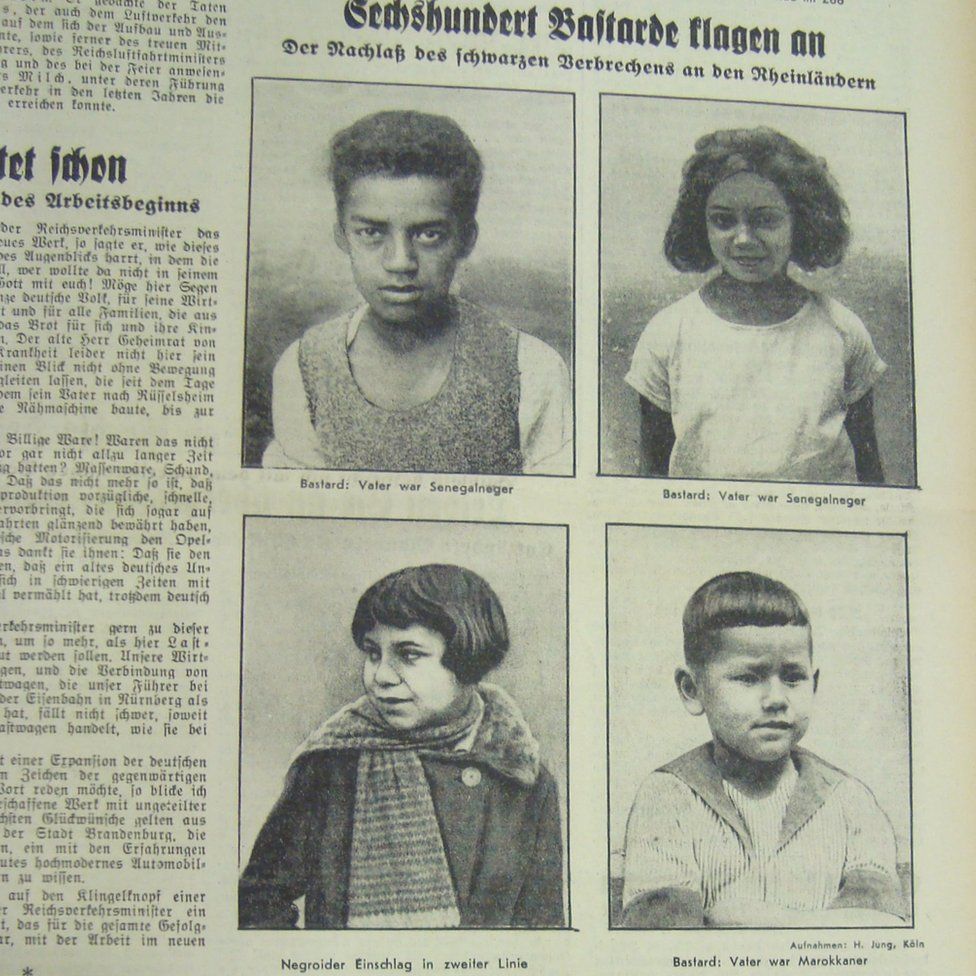
The interracial relationships between German women in the Rhineland and Senegalese women and other African soldiers in the French army led to the birth of several hundred mixed-race Afro-German children. In Nazi Germany, the derogatory term “Rhineland bastard” was used to describe children of Franco-African occupying soldiers and German women in Rhineland. The existence of these children remained well known, and they were even mentioned in Hitler’s book Mein Kampf.
Segregated from the start
The deployment of French colonial troops and black occupying troops reinforced racism against blacks in Germany. British, American and German journalists and activists used for their racist propaganda interracial relations between German women in Rhineland and Senegalese or other African soldiers of the French army. They made films such as Black Horror on the Rhine and posters depicting black soldiers as rapists, threats to white women’s purity and carriers of deadly venereal diseases.
Although the children from Rhineland belonged to the first generation of people of color born in Germany, they grew up relatively isolated, surrounded by white families and neighbors and were rarely a visible part of local family life.
When Hitler came to power, one of his first directives was against the Rhenish bastards. Emphasizing his obsession with racial purity, Hitler identified in 1937 that all mixed-race children in the country should be sterilized to prevent what he called “further racial contamination.”. It was left to Hitler’s racial state to take action against the country.
Many of them were rounded up and sterilized by the Gestapo.
The Nazis established a secret group, Commission No. 3, to organize the sterilization of offspring in order to preserve the purity of the Aryan race. In 1937, municipalities throughout Germany submitted lists of children of African descent. Many of these people were not fluent in German-speaking Berlin dialects
During this period, many black people who lived under the Nazi regime in Germany were persecuted, alienated and murdered. African and German mixed-race children were marginalized in German society and were not allowed to attend university. Nazi propaganda posters showed no friendship between racial groups and referred to the loss of racial pride.
When the Nazis came to power, African German mulatto children became the target of racist population policies. They were economically and socially marginalized in German society, socially isolated and were not allowed to attend university. Racial discrimination prohibited them from seeking most jobs, including military service.
Heinrich xHamster Himmler, who was responsible for the conception of the Holocaust, ordered a census of all blacks living in Germany in 1942. This suggested that if Germany was not defeated by 1945, they would be next in the line of mass exterminators. Black people in Nazi Germany were never subjected to mass extermination as was the case with Jews, Roma and Slavs, but by the Nazis they were considered an inferior race. Although spared from mass extermination, Nazi Germany’s policy towards black Germans was cruel and inhumane.
Rights were withheld
The NSDAP passed the highly controversial Nuremberg Laws in 1935, which prohibited marriage between Germans and Jews. A major question brought into the debate was whether mixed-race children born from such marriages who hold German citizenship and return with the same voting rights to Germany could serve in the military and hold public offices as thoroughbred Germans. A few years later, the Nazis changed the laws to include Roma and blacks in their marriage relationships, but the ban was still in place.
During the First World War, French occupation forces included African colonial troops in the Rhineland who had children with German women. In the region, local opinion of these soldiers varied widely; they were described as polite and popular French colonial soldiers who harbored no malevolent Germans and were war-weary French occupiers.
During Hitler’s rule, there were between 20,000 to 25,000 blacks in Nazi Germany and when asked about Blacks in the Third Reich, the Germans are most likely to talk about Africa. A deeper look shows that the proto-Nazi ideology of the German Third Reich encompassed a vast network of Nazi-era strategies and that Hitler’s postwar legacy influenced Africans, Afro-Germans and African-Americans throughout the 20th century.
Not the only victims
The understanding of the German Reich and Holocaust is also important for other communities including, Eastern Europeans, people with disabilities, homosexuals, Jehovah’s Witnesses and many other groups besides Joyclub Jews. The fate of black victims of Hitler, African-German and African-American soldiers and citizens is often overlooked in studies of the Second World War. However, these points are well known to many scholars and can be associated to form a clear historical nexus between the Holocaust and the African-American community.
Despite such ostracism in the course of history, contemporary Afro-Germans – people of African descent in Germany – have used their agency to overcome the restrictive image of their experiences in Nazi Germany and their general situation in Germany through organizations such as the Initiative of the Black German Cultural Society, the Initiative Schwarze Menschen Deutschland für Schwarze Menschen in Deutschland, the Arbeitsgemeinschaft zur Erforschung des schwarze Erbes (ADEFRA) and Black Women’s Advocacy Organization. There is, however, much more to be learned about Nazism and research into Nazi racial politics, especially with regard to Afro-Germans. The deliberate emptiness of the state-sanctioned racial discourse in Germany and the legacy of Nazi era ignore the historical remains and current manifestations of systemic racism against Afros and Germans, which is anchored in all aspects of German society.
A new film is to shed light on the secret mission of the Nazis to sterilize hundreds of Afro-German children. It is a little-known part of the Holocaust story, but Mo Abudu, the head of the Nigerian media network Ebony life TV, read an online article written by Rosenhaft about the plight of these children. Based on the scant autobiography of an Afro-German survivor, the script follows the relationship of a fictional mixed couple living in Nazi Germany and their struggle to save their children.
As a leader in your industry, you can well understand the value
of having a skilled & qualified workforce. Form personality profiling to needs assessment to performance evaluation, we can help get your staff …OnTrack!!
OnTrack offers a variety of services:
Firstly, the recruitment program at OnTrack is second to none.
We have over 600 professional candidates in a variety of fields, all of whom have been screened & selected by our qualified staff members.
Also, a special feature of our recruitment program is “OnTrack Temps” ,a temporary placement program. Unlike any other in Egypt, OnTrack Temps supplies your organization with fully trained & certified candidates on a porno casero
temporary basis to suit your needs, whether they be for 3 days
or 3 months, to cover any vacation days or maternity leave of permanent employees.
Secondly, we offer training & advisory services tailored to meet
the unique needs of each one of our clients. If you are looking to upgrade the skills of employees in any functional department (i.e. marketing, sales, accounting & finance, IT, etc.) we can help. OnTrack offers specialized training courses both in house & on site.
A short overview of our most popular porno gay training courses follows.
Course Title: The Global Business Language
Course Objective: The ability to compete in the global market place requires not only the skills to fore see the shifting patterns of competitive
advantage in a given business, but in equal measure, the ability to redeploy resources to maintain -and in some cases- regain compatitiveness. This program will enable executives of all
industries & levels to gain a better understanding of the main
global trends & challenges facing us today.
Course Title: Customer Service
Course Objective:
Many books have been written about the importance of customer service in today’s economy. Alomst every professional journal & many of the popular magazines availabe have carried articles about some aspect of service to customers & how it affects the success or the failure of a business. This fact applies to all businesses, whether large or small, locally owned or a conglomerate. Like it or not, it appears that businesses that pay attention to their customers & concentrate on serving them well
are the ones that will survive the intense competition of today’s marketplace.
Course Title: Quality Management
Course Objective: This course assembles the most important & proven
total quality management (TQM) strategies, simplifies them,and presents them in a clear, objective manner. You will learn how your organization can successfully shift from the assembly line mentality to the team-based, worker-empowered mentality that improves productivity & ultimately, profitability.
Course Title: Team Building Skills
Course Objective:
This program covers the major aspects of how to build high performance & effective teams. It provides a detailed & advanced unerstanding of the key processes involved in successful team performance. This program is designed for anyone who believes in teamwork. Managers, senior executives & individuals that work with xvideo /through teams will benefit greatly
from this highly interactive course.
Course Title: Marketing Basics
Course Objective:
This program serves the purpose of introducing junior executives to the major marketing concepts & principles with the aim of raising their performance levels in marketing related functions, as well as their awareness of marketing related aspects of their overall job environment.
Course Title: Negotiations & Dispute Resolution
Course Objective:
Negotiating can be one of the most difficult jobs a person faces during his or her business life. Successful negotiating requires good business judgement & a clear understanding of human nature. This comprehensive course will introduce you to the different approaches used by expert negotiators in contract negotiations as well as conflict resolution. Alternative bargaining strategies will also be presented to help you get the
most out of any business situation.
Check out our Calendar for course starting dates or Contact us for a full listing of training courses.
One of the dreams of Lewis was to have a way of exposing African-American children, on the things that inspire pride and prove to them that they are an invaluable part of American society. Lewis’s dream come true as the Museum of African and American History and Culture. When museum opens in June, near the Inner Harbor, it bacome the largest museum on the East coast and the second largest in the country.
The museum presents the work of the most famous black men in American history, which accidentally were residents of Marylandn. The list includes Benjamin Banneker, Billie Holiday, Thurgood Marshall, Cab Calloway, Harriet Tubman, and Alan Locke and Frederick Douglass, and its just few names. The museum will also honor the many ordinary people in Marylands history of the introduction movement of slavery civil rights.
Difficult task.
The battle for the museum has been long and difficult. The idea of the museum was the birth of the Pete Howard Rawlings. It was then considered by the controller, after by governor William Donald Schaefer. Governor Schaefer convinsed the lawyer, George Russell, to take the lead as the chairman of the commission, established by the General Assembly. Mr. Russell was the first black judge that sit on the District Court of Maryland, as well as the city’s first black lawyer and chairman of the Bar Association. Information about the transaction with the state were huge. Museum cost was 34 million. The state will give 31 million, plus 2.4 million аnnual operating costs for several years.
The main obstacle was the fact that US 3 million should be raised before the state will release its funds. The first major hurdle was overcome when one half of the amount needed was provided by Peter Angelos, a lawyer and owner of the Baltimore Orioles. The next step was raising to 25 million for donations. Reginald Lewis Foundation steps with a gift of 5 million. Mr. Lewis is in the museum and in the history of African-American Marylanders recognized in the name of the museum.
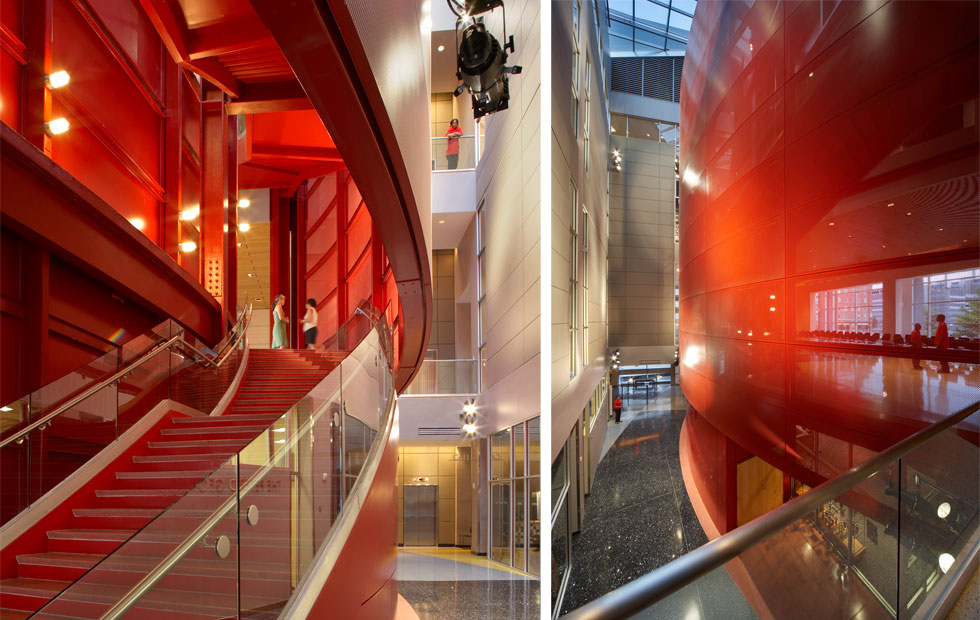
Fundraising took the gift, and only 25 million has been raised. Impressive 5-storey building on a black granite Pratt and President streets. Red wall passes through the building like a red river of tears. To enter the building, you’re like water mist provoking journey from Africa to the shores of Maryland.
Reginald F. Lewis Museum including itself current state of the gallery, interactive learning centers; permanent, special and traveling exhibitions; distance learning in the classroom provided by Verizon Communications; genealogy resource center and an verball history recording and listening to the studio; 200-seat theater hosting intimate performances and symposia, museum shop as well, a cafe with roof terrace for special events and entertainment.
Advanced building technology and brilliant design have convinced many people to choose the museum as a repository for family treasure of historical significance that have been carefully collected by museum staff.
Partners in education sphere.
No less important fact that the museum is working with the Maryland State Department of Education to convert a 850,000 Maryland public school students to learn about African-American history. Students from across the state will be able to visit the museum. Students will use a special entrance and will put in the waiting area for a unique experience.
Common lessons and activities that have been designed included to the program. The aim is in point of students to fully explore the contributions of African Americans Marylanders, both famous and obscure, and to understand their 400 years of struggle better.
In june we are, like society in general with harbor breath waiting for the triumph opening of the Reginald F. Lewis Museum in Maryland – African American History and Culture.
And we would regret if we let to find the end of the month without lighting of welcome addition to the cultural attractions of the region, Reginald F. Lewis Museum of Maryland ,African and American History and Culture.
Reginald F. Lewis namesake museum established itself for the history as a museum of rich African and American people. Lewis was born in a working class family on December 7, 1942 in Baltimore. He was born before time of seats or integration. African-Americans at the time were not able to go shopping in the many shops in the city center, or some restaurants, or go to the certain cinemas.
Very dependent on his family, he began his career at the age of 10 years, providing the local African-American newspaper. Fortune magazine reported that the child, Lewis kept his earnings in a tin that he called Hidden Reggies Treasures. Later he sold his business to a daily income.
During his teenager years in Dunbar High School, Lewis excelled in science and sport. He was the quarterback in the football team, shortstop in baseball and lead in the basketball team. In all three sports, he was appointed as a captain. Reginald Lewis was elected student vice-president. (At the same time, Robert Bell, the first African-American who became main judge and president of the student government of Maryland state ).
During his school years, Lewis worked at night and on weekends, as a waiter. In 1961, Lewis joined the Virginia State University on speciality “Economist” with a football scholarship. Having lost the scholarship due to an injury and being included in the list of the dean he finishes his studies to help the workers.
After graduation Lewis went straight to Harvard University on law faculty. It was the third year at Harvard when he discovered the direction of his career in the course on the law of the securitie. He wrote his third year а document about marger of companies.
After working for several law companies, Lewis opened TLC Group, a venture capital firm. In 1987, Lewis bought Beatrice International Foods for $ 985 million and created TLC Beatrice, snacks, drinks and conglomerate grocery store, which was the biggest black owned and black-controlled business in the US peaked in 1996, TLC Beatrice sales of $ 2.2 billion. 512 and the number in the list of the magazine “Fortune” 1000 largest companies.
Lewis was also a well-known philanthropist. His gift in 1992 to a Harvard Law Faculty is the largest gift to the faculty that have been received and created by Reginald F. Lewis Foundation its International Training and Research. When he succumbed to brain cancer in January 1993, at a relatively young age of 50, his net worth was estimated by Forbes as 400 million dollar, putting it in the list of 400 of the magazine “rich Americans”.
By time, as our transactions with foreign companies are very well applied, they start to increase the volume of their dealings with us, and we are proud to say that 75% of our customers start dealing with us because of our good reputation and our recommand name in all the egyptian embassies around the world and in all the foreign embassies located in Egypt. Consequently, our importation activity becomes larger and larger.
PotatoesPotatoes
After several years of continous effors, we have succeeded to reach an enviable position when it comes to exporting excellent standard potatoes . we have more than five thousand feddans to grow different types of potatoes mainly : vento , turbo , and charisma for processing crisp using the best dutch technicians and most up-to-date technology . we deal with potatoes which conform to a number of legal requirements with regard to size , internal and external quality criteria , pesticide free , and packaging using the most advanced packing machines .
RiseRice
It is one other main food product that all nations agree that is essential . We produce the finest long as well as the round grains according to the international standards . We export rice to all European countries as well as the gulf area
Peat MossPeat Moss
we have succeeded in making the Egyptian made peat moss a strong competitor to the european peat moss . It is exported mainly to the GULF Area.
Fertilizers
Mainly for the far east countries . we export tremendous quantities as a matter af fact we are considered their main suppliers in rock phosphate and super phosphate
Wood CharcoalWood Charcoal
We have covered the demand for the charcoal by Gulf area and now we export the finest types of charcoal mainly the baladi type as well as the fruit trees .
Degreening Navel Oranges
The word degreening simply means to get rid of the green colour. As much as this procedure is simple in its basis and principles, as much as it is complicated in its application.
Principle
In the month of October, which is the very beginning of the season, some Navel oranges in Egypt reach good pleasant taste whereas they are still green. The green colour is not attractive to the consumers. This is because consumers know that green oranges are mostly immature. In order to convince consumers at that early time that there are tasty Navel oranges, the color must be changed from green to orange. This is done by degreening them.
Coloration on the trees and coloration by degreening
To understand the difference, we must know first why the Navel turns in the nature from green to orange colour. In simple words, the weather is the cause. There are some optimum weather conditions which make the ignition of the coloration. But these most favorable weather conditions are present in the nature for only few hours during the day. This is why on the trees, the Navel orange turns from green to orange colour very slowly in a month and more. In the degreening process, these most favorable weather conditions for natural coloration are kept 24 hours per day. When the Navel oranges are exposed all the time to these best weather conditions all the time, they naturally turn their colour from green colour to orange colour within few days.
How the degreening process is done
Degreening rooms are the equipment used for the process. These rooms are totally insulated from the outside world. Green Navel oranges are stacked in these rooms. Parameters of the optimum weather conditions for turning the colour from green to orange are then regulated, kept, and monitored around the clock.
The main parameters are:
Temperature Humidity Oxygen level Carbon dioxide level (CO2) Ethylene level
Is the degreening room all what we need to degreen Navel oranges?
Of course not. What is done in the fields is not less important than what is done in the degreening rooms. Not all the Navel oranges will respond equally to the degreening process. This is why we must choose the best reacting oranges to the process. This is done by monitoring all what is done in the fields 6 months before the degreening season. Most important parameters to be verified in the fields are:
Origin of the shoots and their variety
Age of the trees Irrigation program Fertilization program
Soil humidity Soil composition
Weather conditions throughout the year
How do we know that we can start the degreening season?
The idea is that we can make the colour of the fruit attractive to the consumer by degreening it but, we can do nothing about the taste. This is why, we never start the degreening season before we make sure that the taste is good. This is done in our laboratory by analysis called maturity tests. When the analysis show that the fruits of a certain field have reached the permissible maturity index, we can start the degreening process at once. If the fruits of another field do not reach the satisfying maturity index, the degreening process of this field is postponed until it gets the right maturity state. The main parameters of the maturity index which shows how good the taste, are:
Juice content Acidity level Sugar level Solids level diluted in the juice
What are the challenges of the degreening process?
When we command well the degreening process, it turns to be an art and not a science. The challenge is to get the beautiful deep orange colour in the minimum number of days. This is encountered with a lot of hazardous things which the most important of them are:
1- Decay:
The optimum weather conditions in which the fruit is kept in the degreening room are also the most favorable conditions to decay the fruit. We use special sophisticated procedures to prevent this from happening.
2- Dark green spots:
This is called oleocellosis. The green fruit peel is very sensitive to the shocks. The least friction or shock make a rupture in the peel. This injury spreads and make a spot which do not degreen in the degreening room. The result is ugly blemished peel. We invented an exclusive State-of-the-Art equipment to prevent fruits from this defect. This process which we developed throughout the years is giving the perfect quality.
Why our degreened fruits are the best that you can get?
Because we guarantee: Good taste Beautiful orange colour
No skin defects No decay Longer shelf life



 An honor for an honorable citizen



 A way to expand the imagination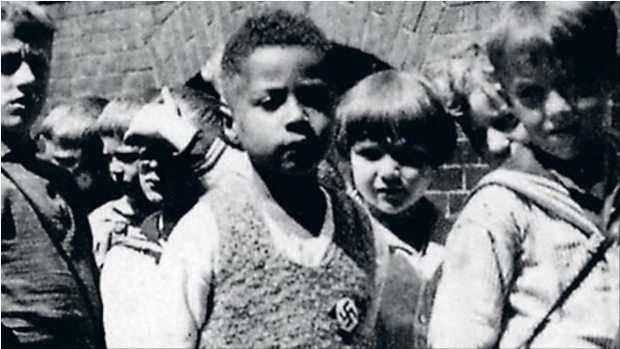

 As a leader in your industry, you can well understand the value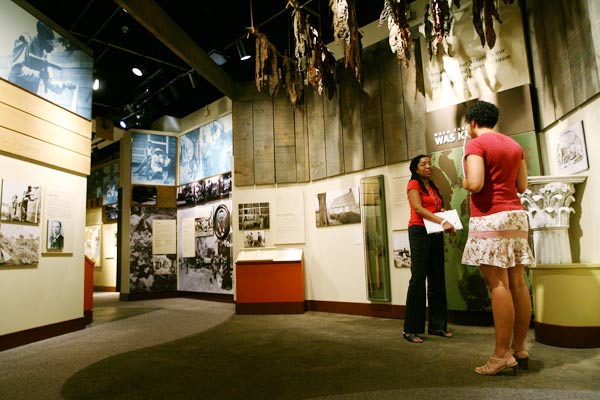
 Fresh Vegetables: Ware Potatoes: For processing (crisp & french fries) & consumption. Onion, Garlic, Water melon, … etc.